• Skip to primary navigation
  • Skip to main content

Southern Gold Society

  • Charlotte Mint
  • Dahlonega
  • New Orleans Mint
    • Louisiana State Museum Exhibit
  • Bechtler Mint
  • Templeton Reid

Features

When US Coins Were Minted in Georgia

May 2, 2022 by Jeff Garrett

The Dahlonega Mint struck numerous gold coins that can add a unique twist to your collection.

Contrary to popular belief, the first significant discovery of gold in America was not in California in 1848 but in the lower Piedmont area of North Carolina in 1799. Conrad Reed, the son of a local farmer, found a 17-pound, yellow-colored rock that later turned out to be gold — after it served a three-year stint as a doorstop! By the early 1830s, the Bechtler family had established a private mint at Rutherford, North Carolina. Sufficient gold was found in the area to justify the opening of an official, US branch mint in 1838 at Charlotte, North Carolina.

Discovering gold in America

Around 1828, another gold rush began when gold was discovered in an obscure area of northern Georgia that was once part of the Cherokee nation. By 1830, an average of 300 ounces of gold a day was being produced in the area. Private minters such as Templeton Reid and the Bechtler family produced their own coins from locally mined gold. In response, the US Mint established a branch mint in 1838 at nearby Dahlonega, Georgia to convert the raw gold into standardized coins.

Collecting coins by their various mintmarks did not come into vogue until the 1890s, after the publication by Augustus Heaton of a treatise on mintmarks. Many of the great collections formed before this time normally included Proof gold coins produced by the US Mint. The Smithsonian National Collection lacked most mintmark gold coins until the extensive Josiah Lilly Collection was donated in the 1960s.

Today, collectors find the short-lived gold issues from Charlotte, North Carolina and Dahlonega, Georgia to be among the most desirable coins from that era and they are eagerly collected.

The US Mint facilities

Before 1933, United States gold coins were produced at Philadelphia (PA), Dahlonega (GA), Charlotte (NC), New Orleans (LA), Carson City (NV), Denver (CO) and San Francisco (CA). All the mints, except Philadelphia, placed a mintmark (a letter or letters) on each of the coins to identify the source. For example, the Charlotte Mint placed a small letter “C” on each of their coins.

Each mint seems to have had its own set of characteristics and quirks. Dahlonega and Charlotte coins are infamous for their poor strikes. Philadelphia appears to have produced the best coins of all the mints. Thus, a complete set of mintmarks includes coins of varying quality and even color because of differences in the metallic composition of local ores.

Southern gold coins that were struck at the Dahlonega and Charlotte Mint were produced between 1838 and 1861. In 1861, Confederate forces seized the Charlotte, Dahlonega and New Orleans Mints. The first two mints were shut down as a result, never to reopen, but the New Orleans Mint was recaptured by federal troops and produced coins until 1909.

Charlotte and Dahlonega gold coins are among the most popular series of United States coinage. The history surrounding their production makes them extremely desirable and collectible. The coins’ unique physical characteristics add greatly to the charm of these fascinating coins.

Dahlonega Mint (1838-1861)

The only known picture of the Dahlonega Mint taken before it was destroyed by fire in 1878.

The Dahlonega Mint opened in 1838 to process locally mined gold. Output at this mint was always low, yet it continued to operate until 1861, when Confederate forces seized the building on the outset of the Civil War. In 1878, the Dahlonega Mint was destroyed by fire. Today, Price Memorial Hall of North Georgia College sits on the original foundation of the Dahlonega Mint. The mintmark for Dahlonega is the letter D, the same as the Denver Mint; however, the two mints never operated simultaneously. The Dahlonega Mint produced only gold coins.

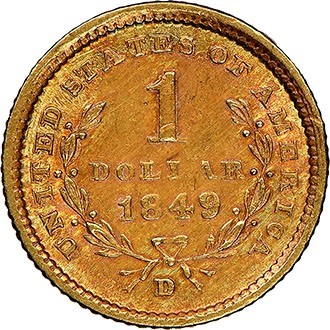
Gold Dollars (1849-1861)

Type One

1849, 1850, 1851, 1852, 1853, 1854
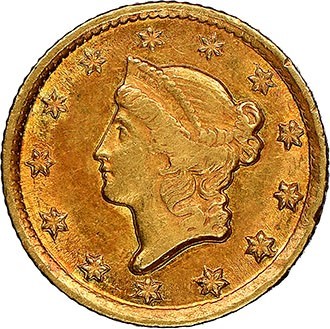
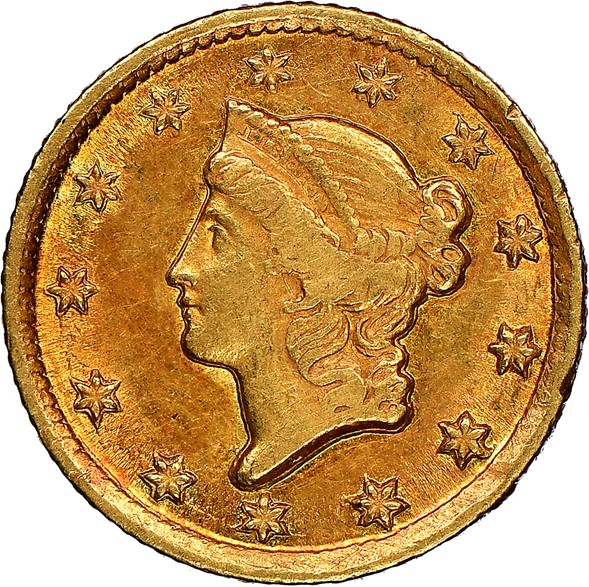
1849-D Gold Dollar

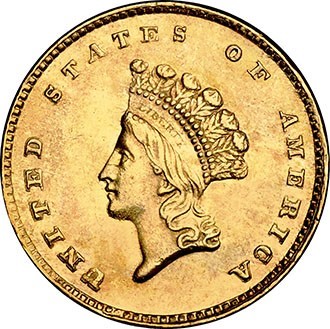
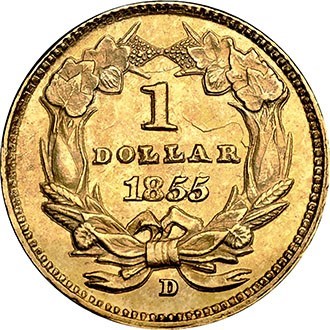
Type Two

1855

1855-D Gold Dollar

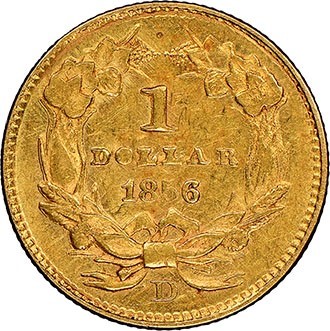
Type Three

1856, 1857, 1858, 1859, 1860, 1861
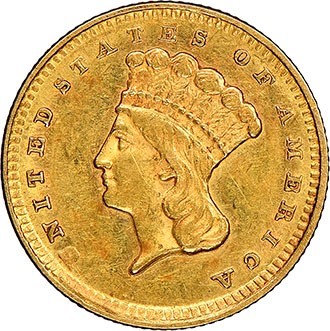
1856-D Gold Dollar

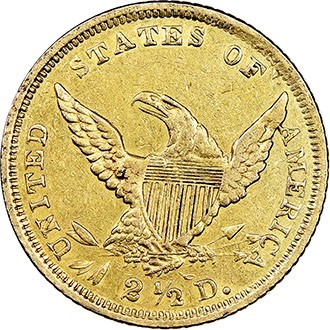
Quarter Eagles (1838-1859)

Classic Type

1838
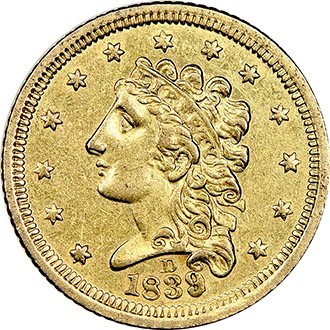
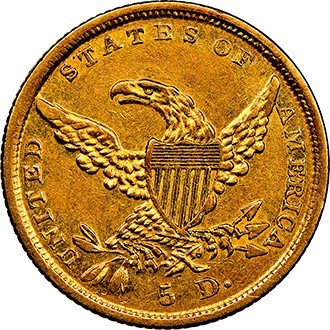
1839-D Classic Head Quarter Eagle

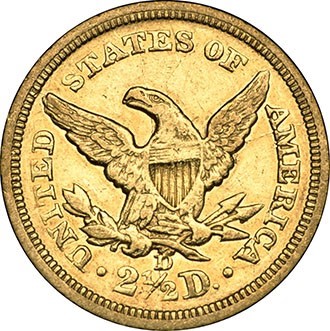
Liberty Type

1839, 1840, 1841, 1842, 1843, 1844, 1845, 1846, 1847, 1848, 1849, 1850, 1851, 1852, 1853, 1854, 1855, 1856, 1857, 1858, 1859
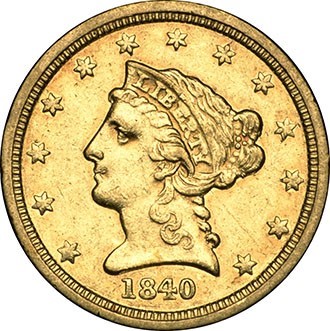
1840-D Liberty Head Quarter Eagle

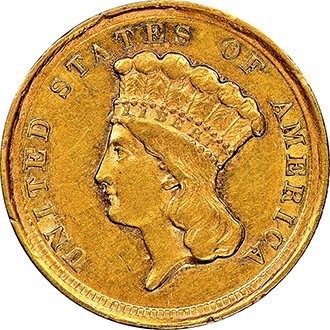
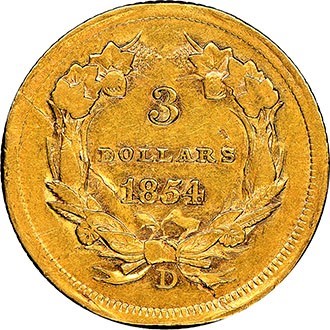
Three Dollar (1854)

Liberty Type

1854

1854-D Three Dollar250

Half Eagles (1838-1861)

Classic Type

1838
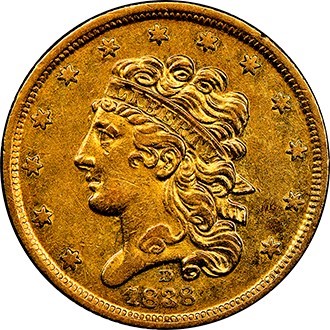
1838-D Classic Head Half Eagle

Liberty Type

1839, 1840, 1841, 1842 Small and Large Date, 1843, 1844, 1845, 1846, 1846 D/D 1847, 1848, 1849, 1850, 1851, 1852, 1853, 1854, 1855, 1856, 1857, 1858, 1859, 1860, 1861
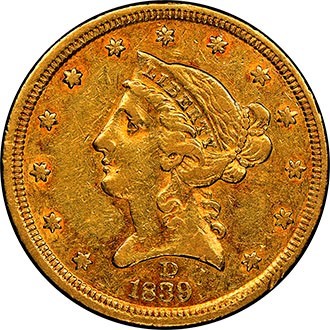
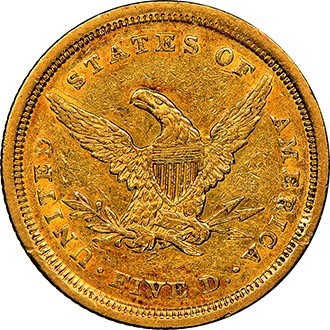
1839-D Liberty Head Half Eagle

The NGC Coin Explorer has complete population information and the NGC Price Guide has information for each coin. This is a great resource for comparing relative rarity and availability in every grade.

A complete set of Dahlonega gold coins consists of the above 62 coins, including major Redbook varieties. Only the most advanced collectors usually attempt a collection of every coin issued.

Unlike most series of United States coins, finding Mint State examples of Dahlonega gold coins is the true exception and not the rule. Most collectors seek pleasing circulated examples in the best condition they can afford. Extremely Fine and About Uncirculated examples are the commonly collected grade for the series.

Many Dahlonega gold coins found on the market were cleaned years ago in an attempt to get a higher third-party grading rating. Today’s collectors place a considerable premium on original “crusty”-looking circulated examples. As with any series you collect, spend some time trying to understand the issues of quality and eye appeal before making a substantial purchase. Examining auction lots is one of the best ways to accomplish this task.

Collecting gold coinsThe following are just a few ways to collect these elusive coins:

Three-piece Type Set

  • Liberty Gold Dollar
  • Liberty Quarter Eagle
  • Liberty Half Eagle

This is a relatively easy task and can be done to fit your budget according to the grade collected.

Eight-piece Type Set

This set is relativity achievable, but much more expensive.

  • Type One, Two and Three Liberty Gold Dollars
  • Classic Head Quarter Eagle and Liberty Head Quarter Eagle
  • Classic Head Three Dollar Gold
  • Liberty Half Eagle

Denomination Set

Many collectors choose one denomination and try to assemble a complete set. Although the Liberty Quarter Eagle set does not contain major rarities such as the 1861-D Gold Dollar and Half Eagle, many of the dates are among the most difficult to find in nice condition.
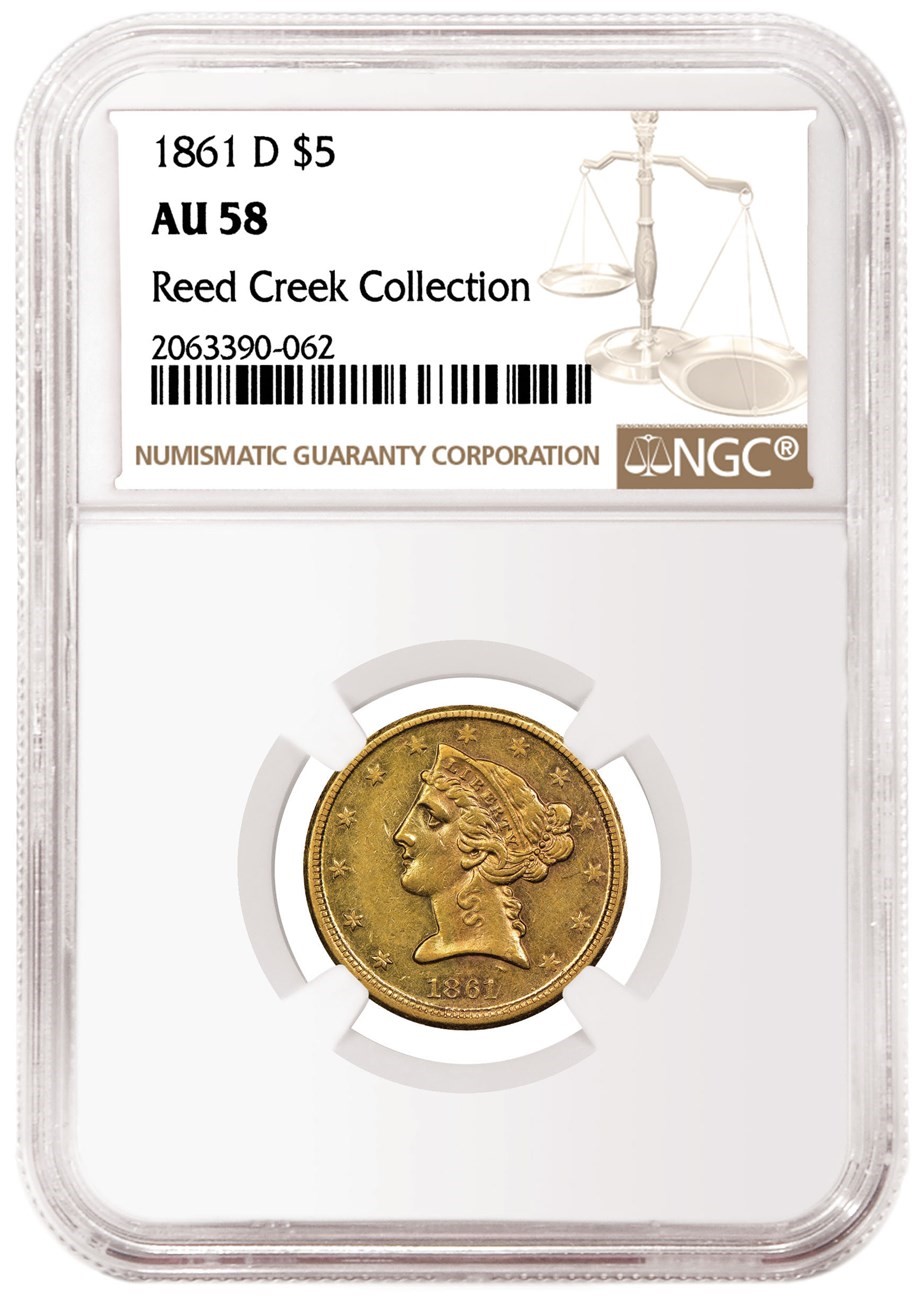
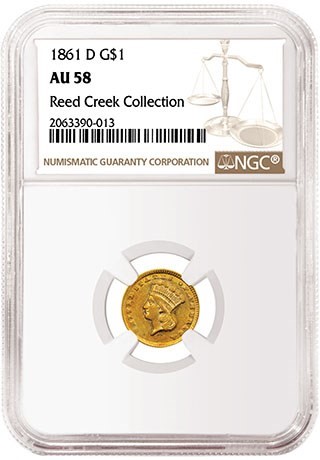
1861-D Half Dollar graded NGC AU 58 (left) and 1861-D Gold Dollar graded NGC AU 58 (right)

A Few Great Coins

Over the years, quite of few of my customers have bought one or two coins from this interesting mint because of the history and charm of the era. The 1861-D Gold Dollar that was struck by the Confederacy is a prime example.

Complete Set

As mentioned above, this is a daunting task and would cost about $500,000 in Extremely Fine to About Uncirculated condition. Over the years, I have assisted many collectors who have taken on this project. About four years ago, Atlanta dealer Robert Harwell and I assembled a complete collection of Dahlonega gold for John McMullan. The collection is now on permanent exhibit at the University of Georgia.

Regardless of the journey you choose, collecting Southern gold coins is both challenging and fun. The coins have the added security of knowing they will not be found in bag quantities from overseas hoards. Attractive examples are becoming difficult to find and, as more collectors discover this area of the market, they will be even harder to locate.

Recommended Reading:

Encyclopedia of United States Gold Coins 1795-1933 by Jeff Garrett and Ron Guth

Gold Coins of the Dahlonega Mint 1838-1861 by Doug Winter


This article originally published in the NGC Weekly Market Report, July15, 2021. Posted here with permission from the author, Jeff Garrett.
Filed Under: Features

Unique 1854 New Orleans Gold Coin Returns Home

June 1, 2021 by News Release

Historic sunken treasure is finally back in The Big Easy after a 167-year journey from the California Gold Rush, an arduous railroad trip across Panama, and being submerged more than 7,000 feet underwater when the S.S. Central America sank in 1857

1854 New Orleans Gold Coin

A unique, sunken treasure gold coin that made its way from New Orleans to the California Gold Rush and then to the Panama railroad before going down with a famous ship has now come home to The Big Easy for the public to see.

It left the United States Mint branch in New Orleans 167 years ago, and for 157 of those years it was submerged on the floor of the Atlanta Ocean as part of America’s greatest lost treasure.

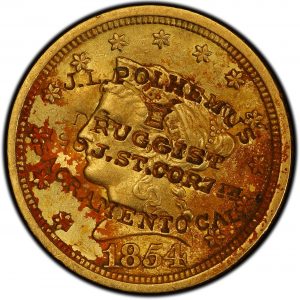
“This historic coin is an 1854 Liberty Head Quarter Eagle struck at the New Orleans Mint and was later counterstamped by California merchant J.L. Polhemus. It was among the sunken treasure recovered in 2014 from the fabled ‘Ship of Gold,’ the S.S. Central America, that sank in a hurricane in 1857 while sailing to New York,” explained Bruce Smith, Director of Numismatics at M.S. Rau Fine Art, Antiques and Jewels (www.RauAntiques.com).

“It is the only gold coin of this denomination known with the advertising counterstamp mark of Polhemus, a Gold Rush-era pharmacist in Sacramento, California. He made so-called store cards with various other coins in circulation at the time. When this particular gold coin was made in 1854 its face value was $2.50. Today, it’s a New Orleans treasure and insured for $65,000 for its first visit home in over a century and a half,” said Smith.

The coin, graded PCGS XF45, is on public display at the Rau gallery, 630 Royal St. in New Orleans, Monday through Saturday from 9 am to 5:15 pm. Admission is free.

Scientist Bob Evans, who was on the successful S.S. Central America recovery missions, told PCGS Rare Coin Market Report Price Guide Magazine, the counterstamped 1854-O Quarter Eagle he discovered while examining treasure retrieved in 2014, is one of his favorite coins.

“That coin was made in New Orleans at a time when the New Orleans Mint may well have been using California gold to mint coins. Gold Rush gold got around back then! So, then this coin made its way all the way to Sacramento, where a shopkeeper hammered his name on it. And then, somehow, it made it on to the S.S. Central America, and then, somehow, we brought it back up 150 years later, a couple of hundred miles from North Carolina. That’s just a great story! An example of a great, full-circle journey,” Evans stated.

The S.S. Central America was a 280-foot long, three-masted side-wheel steamship carrying tons of California gold when she sank on September 12, 1857 hurricane during the cargo’s final leg of the voyage from Aspinwall (now Colón), Panama to New York City. The tragedy took the lives of 420 of the ship’s 578 passengers and crew members and the loss of the gold cargo was a major factor in the economically devastating financial panic of 1857 in the United States.      

When the S.S. Central America site was discovered in 1988 on the seafloor of the Atlantic, 7200 feet down about 150 miles off the North Carolina coast, Life magazine proclaimed it “America’s greatest treasure.”

For additional information, contact M.S. Rau at 888-557-2406 or visit online at www.RauAntiques.com.

Filed Under: Auctions, Features

1861-D Gold Dollar Struck Under Authority of the Confederacy

February 14, 2021 by David Crenshaw

Heritage Auctions senior numismatist Sarah Miller recently shared on social media that a 1861-D gold dollar struck by the Confederacy is up for bid in their United States Coins Signature Auction #1327, February 18-21, 2021.

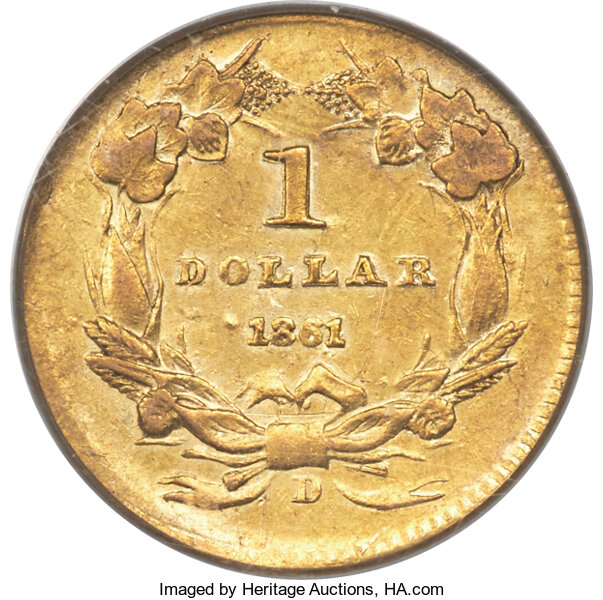
1861-D Gold Dollar Reverse

The coin’s catalog description reads:

1861-D G$1 AU55 PCGS. Variety 12-Q. The 1861-D is one of the most famous gold dollars in the series and certainly the most important from the Dahlonega Mint. Even more significantly, it enjoys status as perhaps the most desirable product from the Georgia facility, regardless of denomination. This high standing is not just a measure of its absolute rarity but also of its historical significance.

The 1861-D gold dollar has been described as a “ghost” coin. The issue has no officially recorded mintage. That is because it was struck not under federal authority, but rather by the Confederate States of America sometime after February 1861, when the Confederacy seized control of the branch mint. Doug Winter cites researcher Carl Lester in proposing a mintage of 500 to 1,000 1861-D gold dollars, while the Guide Book reports an estimated production of 1,250 coins. They were struck from leftover 1860-D obverse die and all show weakness on the U in UNITED.

Winter estimates “five to six dozen known” in all grades, including perhaps 30 to 32 pieces in AU and 10 to 15 examples in Mint State. The certification totals at PCGS and NGC are undoubtedly highly inflated by resubmissions and crossovers. Nevertheless, PCGS reports 14 examples in AU55 and 33 higher grading events (1/21).

The present Choice About Uncirculated survivor displays typically mushy obverse design detail, while the reverse exhibits better definition on the wreath elements in general and the leaf left of the bow in particular. Partial satin luster appears around the devices, complementing orange-gold surfaces that show little more than a few superficial ticks and hairlines. A rather pleasing example of this momentous Southern gold rarity and the first 1861-D dollar we have handled in more than a year.

Filed Under: Auctions, Features

Dahlonega and Charlotte Half Eagles’ Appearance Rarity

January 21, 2020 by David Crenshaw

Coinweek.com recently posted its content partner Douglas Winter’s “CAC and the Appearance Rarity of Dahlonega and Charlotte Half Eagles” article about a new standard that Winter calls “appearance rarity”—coins that are choice enough for their assigned grade to be accepted by Certified Acceptance Corporation.

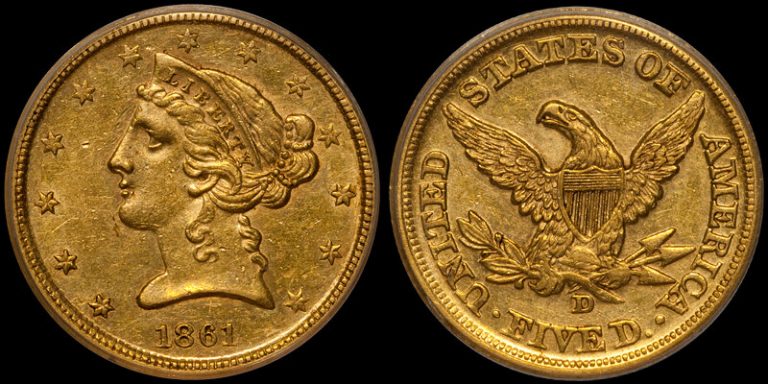
1861-D Five Dollar
1861-D $5.00 PCGS AU58 CAC, OLD GREEN HOLDER; Highest-graded CAC-approved example we have sold in recent years.

He analyzes for appearance rarity Dahlonega and Charlotte half eagles in this article.

These coins are expensive enough and are so avidly collected that a significant percentage of the total coins known in all grades have been submitted to CAC.

CLICK HERE to read this article.

Filed Under: Features

Museum Showcase Features Southern Gold Coins

January 5, 2020 by News Release

National Money Show 2020

The American Numismatic Association National Money Show attendees have the opportunity to see some of the world’s most beautiful and valuable coins, paper money and related numismatic treasures not seen anywhere else. The Museum Showcase features rare and historic items from the ANA’s Money Museum and items generously lent to the ANA from private collections.

Special interest to collectors of Southern gold coins will be a display of the Auraria Collection of Dahlonega Mint Gold. A spectacular complete collection of coins from the Dahlonega Mint including all denominations, dates and varieties. This collection took over 21 years to complete and consists of 66 pieces, making it one of the greatest sets of Dahlonega gold. And, a display of rare Bechtler Mint and Templeton Reid gold coins of the region along with coins from the Dahlonega and Charlotte mints.

Hosted by the Georgia Numismatic Association and the Metropolitan Coin Club, the National Money Show will be held in Hall D of the Cobb Galleria Centre at 2 Galleria Parkway in Atlanta. The show will be open Thursday and Friday, February 27 and 28, from 10 am to 5:30 pm, and on Saturday, February 29, from 10 am to 3:30 pm.

Admission Thursday and Friday is $8 for adults, children 12 and under admitted free. Admission is free for everyone on Saturday.

Additional information can be found online at www.NationalMoneyShow.com.

Filed Under: Features

Speculation Dahlonega Gold Coins Part of Sunken Treasure

October 12, 2019 by News Release

Blue Water Ventures International logo

Blue Water Ventures International, Inc. (BWVI) and Endurance Exploration Group, Inc. (EXPL) announced today that several months of archaeological field work, including magnetometer surveys, has been performed on the 1840 wreck of the Steamship North Carolina. In late September BWVI recovery vessel, the Blue Water Rose, and dive team arrived on site to commence recovery efforts. Gold coins, marble, dinnerware, and brass spikes, used in the ship’s construction, were among the first shipwreck items to be found. Recovery efforts will continue as weather permits during the months of October and November.

The Steamship North Carolina sank the in the early morning of July 25, 1840, after colliding with its sister ship the Governor Dudley. All passengers and crew from the North Carolina were transferred to the Governor Dudley within minutes of the collision without loss of lives. However, passenger baggage and ship’s cargo were lost in the sinking. It has been estimated that the hard currency lost on the SS North Carolina would be worth many millions of dollars in today’s value.

It is believed that some gold coins from the newly commissioned US Mint in Dahlonega in 1838 would have been in circulation prior to the sinking of the SS North Carolina in 1840, and if found, these coins would be extremely valuable in today’s collectors’ market.

Keith Webb, President BWVI, commented, “After working the first half of the 2019 dive season on several wreck sites, some famous, some not, with the goal of future admiralty claims, it’s great to be back in recovery mode on the SS North Carolina, especially when you see gold coins the very first day on site!”

The Blue Water magnetometer survey team will now relocate to the SS Pulaski site, to remap the area. After several trips to the Pulaski site, it has been revealed that the 2018 hurricane season shifted sand and the debris field. In order to use resources efficiently, the BWVI team feels a thorough, updated survey of the area is required.

About Blue Water Ventures International, Inc.

The Company is engaged in the business of conducting archaeologically sensitive recoveries of cargo and artifacts from shipwrecks. Its operations to date have focused on shallow water search and recovery projects in less than 150 feet of water. The Company is now expanding its focus to include deep-water salvage of historic and modern-day shipwrecks. For more information go to http://www.bwvint.com

About Endurance Exploration Group, Inc.

Endurance Exploration Group, Inc. specializes in historic shipwreck research, subsea search, survey and recovery of lost ship containing valuable cargoes. Over the last 5 years, Endurance has developed a research database of over 1,400 ships that are known to be lost with valuable cargoes in the world oceans. For more information go to http://www.eexpl.com.

Forward-Looking Statements

This press release contains forward-looking statements within the meaning of the Securities Act of 1933, as amended, and the Securities Exchange Act of 1934, as amended. Such forward-looking statements are subject to certain risks and uncertainties including, but not limited to ability to further strengthen our balance sheet, ability to raise funding for continued operations, ability to successfully and profitably locate additional wrecks and cargo, ability to establish ownership, and other factors. Therefore, actual results may differ materially from those indicated or implied by such forward-looking statements. Except as required by law, the Company disclaims any obligation to publicly update such statements.

Contact: Keith Webb, Blue Water Ventures International, Inc., (904) 215-7601.

Filed Under: Features

  • « Go to Previous Page
  • Page 1
  • Page 2
  • Page 3
  • Page 4
  • Page 5
  • Page 6
  • Go to Next Page »

Copyright © 2026 · Genesis Sample on Genesis Framework

  • Home
  • About
  • News